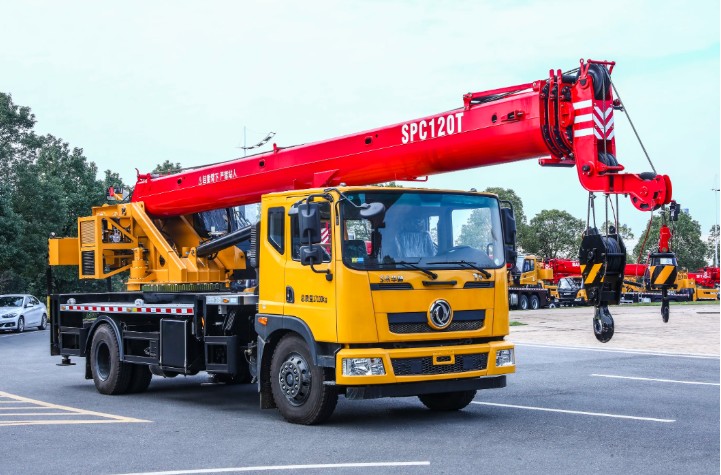
Crane trucks are indispensable in modern construction and industrial landscapes, offering unparalleled flexibility and efficiency in lifting and transporting heavy items. These versatile machines combine the mobility of a truck with the formidable lifting capabilities of a crane, enabling operations in varied environments, from busy urban spaces to sprawling industrial sites. Designed for precision and power, they are crucial for tasks like building construction, bridge erection, and heavy load transport. This guide explores the anatomy and functionality of crane trucks, shedding light on their types, uses, and the critical safety tips to consider. Whether a beginner or seasoned professional, understanding crane trucks enhances decision-making and operational effectiveness on site.
What Is a Crane Truck?
A crane truck is a vehicle equipped with a mounted crane and is designed for lifting, lowering, and transporting heavy objects. Unlike stationary cranes, crane trucks offer mobility, allowing them to be driven to various job sites. Their significance in diverse construction and industrial tasks stems from their ability to move heavy loads efficiently. Typically, crane trucks comprise three fundamental components: a truck chassis for mobility, a crane mechanism for lifting, and safety systems to ensure stable operation. These mobile cranes come in various types and sizes, making them adaptable to specific industry needs. SANY, for instance, produces reliable crane trucks known for their robust engineering and high-quality performance. With a crane truck, complex lifting tasks become manageable, ensuring projects move forward smoothly and safely.
Main Parts of a Crane Truck
Truck Chassis and Mobility System
The backbone of any crane truck is its truck chassis, which provides the essential support and mobility. This component is designed to withstand significant stress, providing a stable base for crane operations. Typically, the chassis includes axles and wheels that facilitate movement over various terrains, whether it be paved roads or uneven construction sites. Durability and strength are paramount; hence, the chassis is constructed from high-grade materials to bear the weight of heavy loads and equipment. The efficiency of the mobility system ensures crane trucks can be quickly positioned at job sites, minimizing downtime and streamlining project workflows. Moreover, advanced models might feature enhanced suspension systems for smoother travel, increasing safety and comfort during transport.
Boom and Lifting Components
The boom is the foremost lifting component of a crane truck, tasked with extending and retracting to handle loads. It can be telescopic or articulated, offering flexibility in reach and maneuverability. Telescopic booms consist of sections that slide in and out, enabling precise positioning of loads. Articulated booms, on the other hand, offer more complex movements, suitable for irregular spaces. These components are powered by advanced hydraulics, allowing for smooth and controlled movements. At the end of the boom, you’ll find lifting equipment like hooks or grabs, tailored to specific lifting tasks. Together, these elements empower crane trucks to handle a wide range of loads and lifting scenarios, ensuring operational versatility across industries.
Hydraulic and Control Systems
Crane trucks rely on sophisticated hydraulic systems for movement and load handling. These systems utilize fluid pressure to drive the mechanical components of the crane, ensuring smooth and powerful execution of lifts. Hydraulics facilitate the extension, retraction, and rotation of the boom, making intricate lifting operations possible. The control system is typically housed in the operator cabin, equipped with levers or joysticks for intuitive operation. This system allows operators to manage crane functions precisely, adjusting speed, direction, and positioning of the load. Advanced crane trucks from manufacturers like SANY incorporate digital displays and sensors, enhancing safety and efficiency. These technologies provide real-time feedback on operation conditions, empowering operators to make informed decisions and maintain safe operation procedures.
How Crane Trucks Work
Setting Up for Lifting
The setup phase is crucial for effective crane truck operations, ensuring safety and efficiency from the onset. It begins with positioning the truck at the designated site, taking into account ground conditions and necessary clearances. Operators extend outriggers, stabilizing the truck against potential shifts during lifting. These are adjustable and deployed based on load weight and site conditions, ensuring the truck remains firmly in place. Next, the crane arm is prepared, with the boom positioned to the desired range for operation. In this phase, communication between the ground crew and operators is vital, aligning on lifting plans and movements to ensure seamless coordination. Safety checks are conducted on all equipment, verifying load attachment points, hydraulic systems, and control responses. With the setup complete, the crane truck is ready to undertake lifts, optimizing efficiency and safeguarding all personnel involved.

Boom Extension and Load Movement
Boom extension is a critical step in crane truck operations, influenced by the load’s size and weight. Operators extend the boom through hydraulic power, achieving the desired reach and height for the lift. This extension must be carefully managed, considering the load’s dimensions and weight distribution to prevent imbalances. Once the boom is properly extended, the crane’s lifting components secure the load and begin precise movement. Crane trucks utilize a combination of lift, rotate, and position movements to transport loads safely. Constant communication and precise controls ensure loads are moved smoothly, minimizing the risk of errors. With experienced operators at the helm, crane trucks achieve reliable and efficient load handling, even in complex environments.
Stabilization and Safety Features
Crane trucks are equipped with stabilization and safety features essential for secure operations. Outriggers are the primary stabilizers, preventing shifts and tilts during lifting. These extend outward from the truck, providing a wider base of support. Additionally, load moment indicators and anti-two block systems offer further safety, warning operators of potential overload conditions. Enhanced operator cabins feature reinforced structures with modern control dashboards, maximizing safety and ease of use. Regular maintenance checks on hydraulic systems and mechanical components are critical, ensuring the consistent operation of safety features. Collectively, these systems safeguard personnel and equipment, optimizing crane truck operation integrity.
Types of Crane Trucks
Truck-mounted Telescopic Cranes
Truck-mounted telescopic cranes are renowned for their versatility and efficiency in streamlined lifting operations. These cranes feature a boom with telescopic sections that extend outward, adapting reach in real time. This flexibility makes them ideal for projects requiring precision and varied heights. Typically used in construction and infrastructure settings, they efficiently handle tasks like moving materials to high elevations or distant points, thanks to their hydraulic-driven extension capabilities. SANY produces these solutions for industries seeking efficient mobility combined with high work rates. Their truck-mounted design offers full mobility, enabling rapid deployment across multiple sites, amalgamating convenience with high-capacity lifting, crucial for dynamic project demands.
Boom Trucks and Articulated Cranes
Boom trucks are defined by their long, fixed booms, serving a variety of lifting tasks with ease. Ideal for simpler projects that demand straightforward vertical lifts, boom trucks shine in environments like urban construction. Articulated cranes offer greater movement with sections capable of independent rotations, accommodating tasks in constricted spaces where precision is needed. Both types boast impressive load management, facilitated by robust hydraulic systems for controlled lifts. SANY’s offerings in this category focus on reliability and adaptability, providing comprehensive solutions tailored to specific lifting needs. Their design allows operators to execute complex maneuvers, ensuring projects progress efficiently and safely.
Heavy-Duty Truck Cranes with High Lifting Capacities
Heavy-duty truck cranes are pivotal in projects demanding substantial load management and exceptional lifting capacities. Engineered for lifting exceptionally heavy items, they thrive in industries like mining, large-scale construction, and port logistics. Their powerful hydraulic systems offer seamless movement of enormous loads, while reinforced booms ensure stability under stress. SANY’s heavy-duty models are designed to exceed expectations, featuring superior engineering for optimal performance. These cranes manage tasks other standard models might falter on, due to their robust construction and focused lifting mechanisms. With these capabilities, heavy-duty truck cranes empower industries to pursue ambitious projects, bolstering productivity through assured capacity and dynamic strength.
Uses and Applications of Crane Trucks
Construction and Infrastructure Projects
Crane trucks are integral to construction and infrastructure projects, enhancing the efficiency and safety of operations. In building construction, they lift heavy materials like steel beams and concrete panels to desired heights. Infrastructure tasks see crane trucks positioning sections of bridges or other large elements, enabling intricate installation procedures. Their mobility allows quick repositioning on-site, adapting to evolving project needs. SANY crane trucks seamlessly integrate into these environments, offering robust lifting coupled with precision controls. By leveraging crane trucks, construction entities achieve swift cycle completions and heightened productivity. These machines bring power and precision, essential for ambitious infrastructure goals and ensuring project timelines are met.
Industrial and Logistics Roles
In industrial and logistics sectors, crane trucks serve as essential tools for managing and transporting heavy goods efficiently. Used in warehousing, they lift and position heavy equipment and bulk materials, optimizing spatial organization and access. Logistics operations deploy crane trucks to load and unload cargo, streamlining supply chain processes with swift and reliable handling. SANY’s crane trucks, known for durability and precision, excel in these roles, offering the strength and control needed to handle diverse industrial tasks. By employing crane trucks, businesses enhance operational fluidity and achieve cost-effective, time-efficient solutions, meeting demanding logistics requirements with ease. Their practicality and efficacy help drive industry competitiveness.
Choosing the Right Crane Truck
Match Lifting Capacity to Your Needs
Selecting the appropriate crane truck involves aligning its lifting capacity with project requirements. Assessing weight limits and boom reach underpins decision-making, ensuring optimal performance. Crane trucks vary in lifting capacities, accommodating different industry needs—light lifting for modest construction or heavy-duty for industrial tasks. SANY’s offerings embody this versatility, presenting options suited to varied demands. Key considerations include average load sizes, elevation requirements, and typical boom extensions, forming a basis to identify the best fit. Understanding capacity parameters allows careful planning, optimizing truck use while preventing overloading. Informed selection guarantees reliable performance, safeguarding projects and optimizing investment.
Consider Terrain and Mobility Requirements
The terrain plays a significant role in choosing the right crane truck. Investigating site conditions informs decisions, ensuring equipment adapts to environmental demands. Uneven surfaces or tight access points may necessitate specialized mobility systems or enhanced suspension features. Crane trucks differ in terrain adaptability, from standard road-based models to off-road capable units with all-terrain tires. SANY emphasizes versatility, with models reflecting adaptable designs suit varied terrains. Factoring in mobility requirements enhances functional reliability, facilitating seamless transitions across challenging sites. Detailed evaluations of location dynamics help secure the most efficient model, enabling successful and consistent operations under varied conditions.
Safety Systems and Operator Comfort
Safety and comfort are paramount in crane truck selection, impacting operational efficiency and crew welfare. Advanced safety features prevent accidents, with systems like load indicators and stabilizers optimizing secure lifts. Operator comfort is equally crucial, promoting sustained productivity through ergonomic cabin designs and user-friendly controls. SANY crane trucks prioritize these aspects, offering enhanced safety systems to mitigate risks and supportive cabins for operator ease. Considerations include cockpit visibility, control ease, and fatigue reduction designs, nurturing a safe and efficient working environment. With effective safety measures and comfortable ergonomics, crane trucks foster a focused and motivated workforce, ensuring optimal project progression.
Safety Tips for Operating Crane Trucks
Operating a crane truck demands stringent safety adherence to protect personnel and equipment. Prioritize thorough inspections, checking hydraulic systems, load tests, and control integrity before deployment. Implementing strong communication protocols between operators and the on-ground team enhances coordination, mitigating risks of errors. Operators should be familiar with emergency procedures and safety measures provided in the truck’s manual. Maintaining a clear work area around the crane is essential, preventing accidental injuries or equipment damage. Regular training updates ensure operators are proficient with the latest safety practices and technologies. By fostering a culture of safety, crane operations can proceed smoothly, underpinning project success through minimized risk and maximized efficiency.
Conclusion
Crane trucks are versatile and powerful tools that significantly enhance construction, industrial, and logistics operations. Understanding their components, types, and applications aids in selecting the right crane truck, tailored to your specific needs. Safety remains a focal point, ensuring operations are risk-free and productive. SANY crane trucks exemplify the balance between robustness and adaptability, offering solutions that cater to varied industry requirements. With informed choices about capacity, mobility, and safety features, crane trucks serve as assets on any job site, driving efficiency and ensuring project milestones are effectively met. Embrace the potential of crane trucks, transforming operational capabilities and achieving new heights in project execution.