You may feel uneasy when you lose a tooth. You might worry about how you look, how you eat, and how others see you. You have two common choices to replace missing teeth. You can choose implants or you can choose dentures. Each choice affects your daily life in clear ways. This blog explains three major differences between them. You will see how they compare in comfort, care, and cost. You will also see how each option affects your jaw, speech, and eating. If you are thinking about dental implants in Chinatown, Lower Manhattan, or you already wear dentures, this guide can help you feel more sure. You deserve clear facts, not pressure. You deserve a solution that fits your mouth, your budget, and your routine.
1. How implants and dentures fit in your mouth
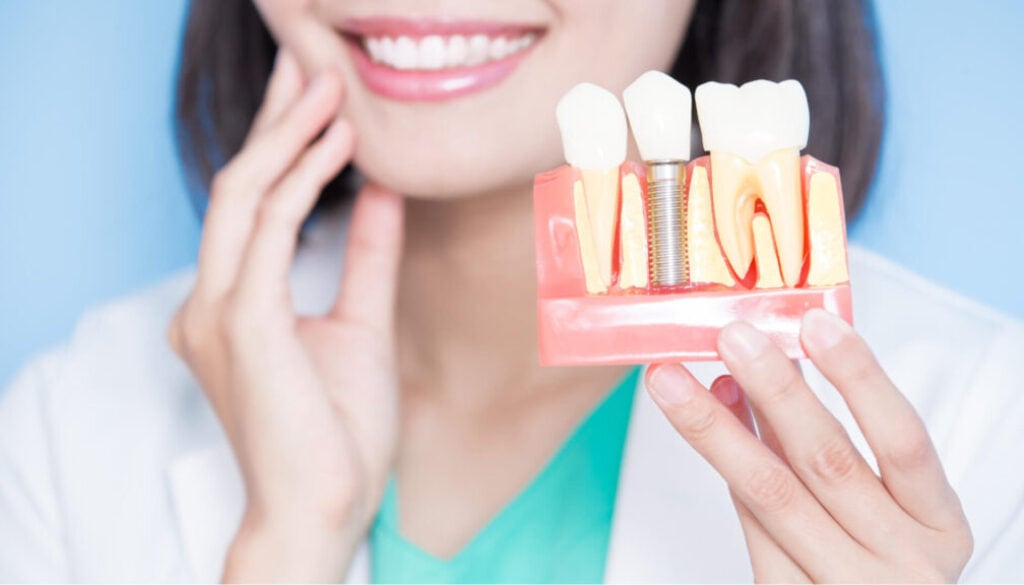
Implants act like artificial roots. A dentist places a small post in your jaw. Then a single crown, bridge, or full arch snaps on that post. The implant stays in place. You do not remove it at home.
Dentures sit on top of your gums. A full denture replaces all teeth on one arch. A partial denture clips around some natural teeth. You take dentures out to clean them and often before sleep.
This basic design difference shapes how each option feels. Implants feel closer to natural teeth. Dentures feel like a separate piece in your mouth. Some people accept that feeling with no stress. Others find it hard.
Fit and daily feel
| Feature | Implants | Dentures
|
|---|---|---|
| How they stay in | Post in the jaw bone | Rest on gums, may use suction or clasps |
| Removal at home | No | Yes |
| Feeling when you talk | Similar to natural teeth | Possible movement or clicking |
| Feeling when you eat | Firm bite on many foods | Care with harder or sticky foods |
The fit also affects your jawbone. When you chew with implants, the force goes into the bone. That helps slow bone loss after tooth removal. The National Institute of Dental and Craniofacial Research explains that missing teeth and lost chewing force can lead to bone shrinkage. Dentures rest on top of this bone and do not send the same force inside it.
2. Daily care, cleaning, and long-term changes
Care is one of the biggest differences. It shapes your routine every day.
With implants, you brush and floss as you do with natural teeth. You still need regular cleanings and exams. You need to keep your gums clean. That lowers the chance of infection around the implant. You do not soak implants in a cup. You do not use denture paste.
With dentures, you follow a different routine.
- You remove them and rinse them after meals.
- You brush them with a denture brush.
- You soak them in a denture cleaner most nights.
- You brush your gums and tongue to keep them clean.
Over time, your mouth changes. Bone and gum tissue can shrink. Dentures that once fit well may start to rub or feel loose. You may need a reline or a new set to keep a safe fit. The Centers for Disease Control and Prevention notes that tooth loss is often linked with gum disease and bone loss. That change does not stop after teeth come out.
Implants can also fail if you smoke or skip cleanings. Yet when they heal well and you care for them, they often stay stable for many years.
Care and upkeep
| Task | Implants | Dentures
|
|---|---|---|
| Daily cleaning | Toothbrush and floss | Brush plus soaking solution |
| Sleep routine | Implants stay in | Often removed at night |
| Adjustment needs | Less frequent once healed | More frequent as bone changes |
| Risk with poor care | Gum infection around implant | Sores, infections under denture |
3. Cost, time, and who each option suits
Money and time matter. You deserve clear numbers and clear steps. You also deserve a choice that matches your health.
Implants cost more at the start. Each implant, crown, and any bone work adds to the price. Treatment can take months from the first scan to the final tooth. Many people still choose implants because they want a fixed option. They want fewer food limits. They also want to slow bone loss.
Dentures cost less at the start. They replace many teeth at once. Treatment often takes weeks instead of months. That can help when money is tight or when you need teeth fast. Yet you should plan for future relines and new sets. Those costs build over time.
Here is a simple view of which choice may fit common needs. Costs are general and change by clinic and region.
Cost and suitability overview
| Situation | Implants | Dentures
|
|---|---|---|
| Upfront cost | Higher | Lower |
| Number of missing teeth | Good for one tooth or full mouth | Most common for many missing teeth |
| Jaw bone strength | Needs enough bone for support | Can work with less bone |
| Health limits for surgery | Needs surgery and healing time | No implant surgery needed |
| Long term feel and function | Closer to natural teeth | More movement and food limits |
Some people use both options together. For example, two to four implants can hold a removable denture in place. That can give more stability with fewer implants.
How to decide what is right for you
You do not need to choose alone. A dentist can check three things.
- Your health and any medicines you take.
- The shape and thickness of your jawbone.
- Your goals for eating, talking, and smiling.
Bring clear questions.
- How long will each option last for you?
- What foods will you need to avoid?
- What are the total costs over ten years?
Tooth loss can feel heavy. Still, you can regain steady chewing, clear speech, and a calm smile. With honest facts about implants and dentures, you can choose a path that respects your body, your time, and your savings.