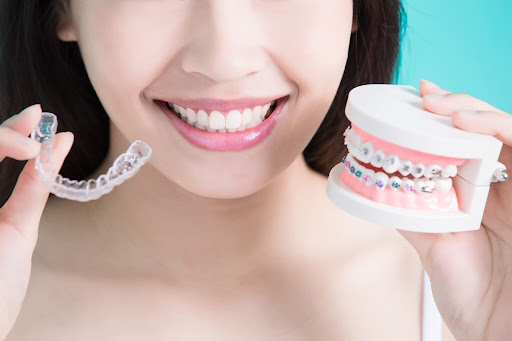
You want straight teeth. You also want a treatment that fits your daily life. Clear aligners and traditional braces both move teeth. They do it in very different ways. Those differences affect your time, comfort, and wallet. They also change how you feel at work, in class, and in photos.
This guide explains four key differences between clear aligners and braces. You will see how each option affects your look, eating, cleaning, and office visits. You will also learn when one method works better than the other.
If you already see a dentist in Pasadena, TX, you can use these points during your next visit. You can ask direct questions and push for straight answers. You deserve clear facts, not pressure.
By the end, you will understand which path fits your mouth, your habits, and your schedule.
1. How They Look In Your Mouth
Appearance matters. Your smile shows up in every photo and video call. Clear aligners use thin plastic trays that fit over your teeth. Braces use brackets and wires that sit on the front of your teeth.
- Clear aligners are see through. People often cannot spot them from a short distance.
- Braces are metal or ceramic. They stand out in photos and face to face talks.
- Both can work for adults and teens. The difference is how much you want others to notice your treatment.
For some teens, braces feel like a badge of change. For many adults, clear aligners feel safer at work. Neither choice is wrong. The right one fits your comfort with attention.
2. Eating And Daily Habits
Food rules shape your day. Braces and clear aligners handle eating in very different ways. Braces stay on your teeth all the time. Clear aligners come out when you eat or drink anything except water.
| Topic | Clear Aligners | Traditional Braces
|
|---|---|---|
| Eating | Remove trays to eat. No food limits if you put trays back on after. | Avoid hard, sticky, and chewy food that can break brackets or bend wires. |
| Snacks | Extra snacks mean extra tray removal and cleaning. | Snacks are easier but must still avoid problem food. |
| Sports | Remove trays for contact sports. Use a mouthguard. | Need a mouthguard that fits over brackets. |
| Music | Usually less effect on wind instrument use. | Brackets can rub lips and change how playing feels at first. |
Braces demand food changes. Clear aligners demand habit changes. You must wear aligners 20 to 22 hours each day for them to work. If you snack often or forget to put trays back in, you may fall behind on your plan.
The American Association of Orthodontists shares clear food and snack tips for braces and aligners at aaoinfo.org. You can use these tips to plan meals that protect your teeth during treatment.
3. Cleaning And Oral Health
Clean teeth move better and stay stronger. Braces and clear aligners change how you brush and floss. They also change your risk for cavities and gum problems.
- With clear aligners, you remove the trays. Then you brush and floss like normal. You also clean the trays with a soft brush and cool water.
- With braces, you brush around brackets and wires. Flossing takes more time and tools like floss threaders or small brushes.
- Plaque can collect faster around brackets. That can cause white spots and decay if you rush your routine.
The National Institute of Dental and Craniofacial Research explains simple brushing and flossing steps for all ages at nidcr.nih.gov. Those steps matter even more when something is on your teeth every day.
Braces may demand more effort to keep teeth clean. Clear aligners may feel easier. Yet if you keep trays in without brushing after meals, food and sugar sit on your teeth. That can harm them too.
4. Office Visits, Treatment Time, And Cost
Time and money matter to every family. Both options can straighten teeth. The path to get there is different. The right choice depends on how complex your bite is and how steady you are with daily use.
| Factor | Clear Aligners | Traditional Braces
|
|---|---|---|
| Office visits | Usually fewer in person visits. Many checks are quick. | More frequent visits for wire changes and repairs. |
| Treatment length | Often similar to braces for mild to moderate cases. Needs steady wear. | Works for mild to very complex cases. Time can be longer for tough bites. |
| Repairs | Lost or broken trays can slow progress. | Loose brackets or broken wires need urgent visits. |
| Cost | Often close to braces. Varies by case and aligner brand. | Often close to aligners. Varies by case and type of braces. |
Braces can treat almost any bite problem. Clear aligners work best for mild to moderate crowding and spacing. Some complex bites still need braces or a mix of both. A clear talk with your orthodontic team will show what fits your mouth and your budget.
How To Choose What Is Right For You
Both clear aligners and braces can give you a straighter smile. The better choice depends on three things. Your goals. Your daily habits. Your comfort with change.
- If you want a low profile look and can wear trays as directed, clear aligners may fit.
- If your bite is complex or you do not trust yourself to keep trays in, braces may serve you better.
- If money is tight, ask for a full cost breakdown for both options. Include visits, repairs, and retainers.
You do not need to guess. Bring your questions and fears to your next dental visit. Ask which option fits your mouth. Ask how long it will take and how to keep your teeth safe during treatment. You deserve steady guidance and clear answers that respect your time, your health, and your peace of mind.