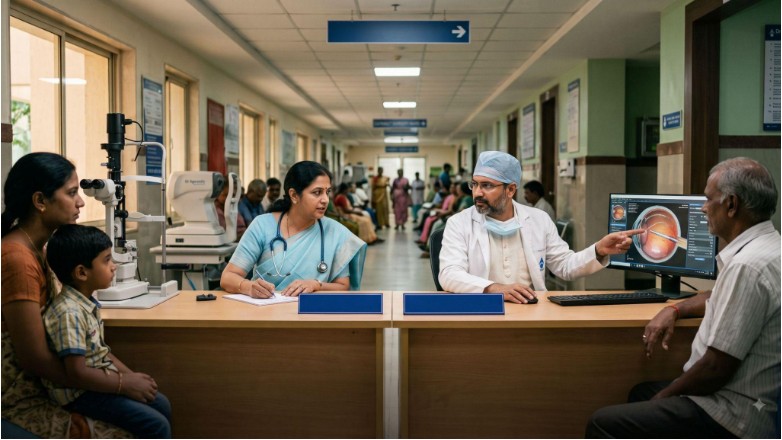
Clear vision supports everything from reading and working to driving, recognizing faces, and enjoying everyday moments. Yet the type of professional you need may change as your eye health needs change. Routine vision checks, persistent discomfort, sudden changes in sight, and conditions that require surgery do not always follow the same care pathway.
Understanding the roles involved can make the process feel less confusing and help you seek the right level of attention at the right stage with greater confidence.
Who Is an Eye Doctor?
The term eye doctor is often used broadly for professionals involved in examining vision and maintaining eye care. An optometrist commonly provides routine vision tests and corrective lens prescriptions. At the same time, an ophthalmologist is a medically trained eye specialist who can diagnose and treat a wider range of eye conditions safely.
Who Is an Eye Surgeon?
An eye surgeon is generally an ophthalmologist with medical and surgical training in eye care. This professional evaluates conditions that may require an operation and performs appropriate procedures. Depending on expertise, they may focus on the cornea, retina, glaucoma, cataracts, or other structures affecting vision and overall eye health needs.
Eye Doctor vs Eye Surgeon: What Is the Difference?
An ophthalmologist may provide both medical and surgical care, so these roles can overlap rather than always representing separate professionals.
| Aspect | Eye Doctor | Eye Surgeon |
| Primary role | Provides vision assessment, routine eye care, diagnosis, or treatment depending on professional qualification. | Focuses on medical conditions where surgical treatment may be required. |
| Typical care | Eye examinations, vision correction, monitoring, and management of suitable eye concerns. | Surgical assessment, procedure planning, surgery, and post-operative follow-up. |
| Training | May refer to an optometrist or ophthalmologist, so training and scope can differ. | Usually an ophthalmologist with medical training and the skills required to perform eye surgery. |
| When needed | Routine checks, changing vision, discomfort, or ongoing eye concerns. | When an eye condition needs surgical evaluation, a procedure, or specialist follow-up after treatment safely. |
Role in Routine Eye Examinations and Vision Care
Routine examinations help assess how clearly you see and whether your eyes show signs that need closer attention. An eye doctor may check vision, refractive errors, eye coordination, and general eye health before advising suitable next steps.
- Assess changes in near or distance vision.
- Prescribe or update spectacles or contact lenses where appropriate.
- Identify signs that may require medical evaluation.
- Guide patients on practical habits that support comfortable, healthy vision in everyday life and routines health.
Role in Diagnosing and Managing Eye Diseases
Eye problems are not always limited to blurred vision. Redness, pain, flashes, persistent dryness, or gradual changes in sight may need clinical assessment. An ophthalmologist can diagnose eye disease, recommend medical treatment, monitor progression, and decide whether surgical care is necessary.
- Evaluate symptoms and examine eye structures in detail.
- Manage suitable conditions with medicines or other treatment.
- Monitor long-term eye diseases and changes in vision.
- Refer for or perform surgery when clinically appropriate and necessary.
Conclusion
Eye care works best when the level of expertise matches the condition. Routine vision needs may begin with a general eye examination, while complex disease or surgery requires medical and surgical expertise.
Knowing how an eye specialist, eye doctor, ophthalmologist, and eye surgeon may fit into different stages of care makes the journey clearer. Timely assessment also helps ensure that vision changes receive appropriate attention rather than being ignored.