The startup story that gets told publicly is heavily curated. It centers on the breakthrough insight, the viral launch, the dramatic pivot, the funding announcement, the hypergrowth quarter. These moments are real, but they represent a small fraction of what actually goes into building a company that lasts. The rest is work that nobody covers and few founders talk about because it does not make for a particularly good story.
But the unglamorous work is often the most important work. And the founders who understand this, who are willing to do the repetitive, unglamorous, occasionally tedious things without treating them as beneath their attention, are the ones who tend to build the most durable businesses.
Customer Support as a Product Function
In the early stages, handling customer support is not overhead. It is a product research function. Every complaint, every confused question, every suggestion that starts with why does it not do this is a data point about the gap between what your product does and what your customers need it to do.
Founders who handle customer support themselves in the early stages, rather than delegating it at the first opportunity, learn things about their product that cannot be learned any other way. The specific words customers use to describe their frustration. The workarounds they have invented because the product does not do what they need. The features they are missing so badly that they describe them in detail without being asked. This information is more valuable than most user research projects because it comes from people with real needs making real requests.
Doing It Manually Before You Automate
There is a bias in startups toward automating processes before understanding them. The instinct to automate everything as quickly as possible is understandable: it is time-efficient, it scales, and it feels like progress. But founders who automate processes they do not fully understand tend to systematize their own mistakes rather than eliminate them.
The better approach is to do things manually until you understand them well enough to automate them intelligently. This might mean manually sending onboarding emails for the first hundred customers so you can see exactly which ones get responses and which ones generate questions. It might mean manually curating the first version of a feature that will eventually run automatically. It might mean handling the first version of a workflow yourself before writing the code that handles it at scale.
Consistency Over Bursts
One of the most important forms of unglamorous work is the discipline of showing up consistently. Writing the weekly update when you do not feel like writing. Making the customer check-in calls when the pipeline is already full. Publishing the piece of content even when you are not sure anyone will read it. These habits feel insignificant on any given day and compound into significant advantages over time.
The founders who build audiences, communities, and customer relationships tend to be the ones who showed up consistently before those things existed. The newsletter that now drives twenty percent of new customer acquisition started as a few hundred subscribers who were not sure why they signed up. The community that generates referrals started as a Slack group with eight people. The blog that ranks for important terms started as a series of posts that got very little traffic.
Doing Things That Do Not Scale
The advice to do things that do not scale remains some of the most practically useful guidance for early-stage founders. It gets cited often and ignored often, because the desire to find the scalable approach before validating the unscalable one is very human.
When you build with Enter Pro, you are creating the infrastructure for scale. But the early customers who determine whether there is anything worth scaling require attention that does not scale. The personal email. The founder-led demo. The follow-up call to check in two weeks after a customer signed up. These are the interactions that convert curious users into committed customers and committed customers into vocal advocates.
Documentation as Infrastructure
Documentation is genuinely unglamorous. Writing down how the product works, how the support process runs, how a new customer gets onboarded, how a sales conversation is structured, is time-consuming work that produces outputs that are invisible to customers and not interesting to investors. And it is one of the most valuable investments an early-stage company can make.
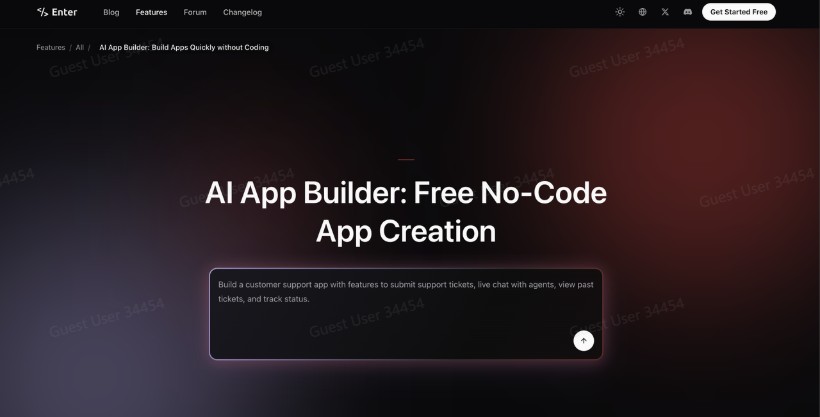
Good documentation makes every subsequent team member more effective faster. It captures the learning embedded in the current processes before people who built those processes move on. It creates the ability to evaluate and improve processes rather than just running them because that is how they have always been done. Using an AI app builder to think through the product and then documenting the logic and decisions behind what was built is part of building a company where knowledge compounds rather than disappearing when circumstances change.
The Long View
The unglamorous work is not what gets written about. It is what the things that get written about are built on. Every breakthrough moment has months of consistent, unspectacular effort behind it. Every viral launch has a product built through patient iteration. Every funding announcement reflects a company that did the work that made the company fundable.
The founders who understand this are not more talented than the ones who do not. They are more honest about what building something actually requires, and more willing to do it without waiting for it to feel exciting.
There is a related discipline worth naming: the willingness to stay close to the unglamorous numbers even when the glamorous ones are good. The months when new customer growth is strong can be exactly the months when churn creeps up unnoticed, when the cost per acquisition quietly rises, or when the support burden grows faster than the team can handle. The founders who catch these things early tend to be the ones who never stopped looking at the mundane operational metrics even when the headline numbers were providing plenty of good news.