A finish mower is a lawn machine wearing tractor clothes, and treating it as a brush cutter ends badly

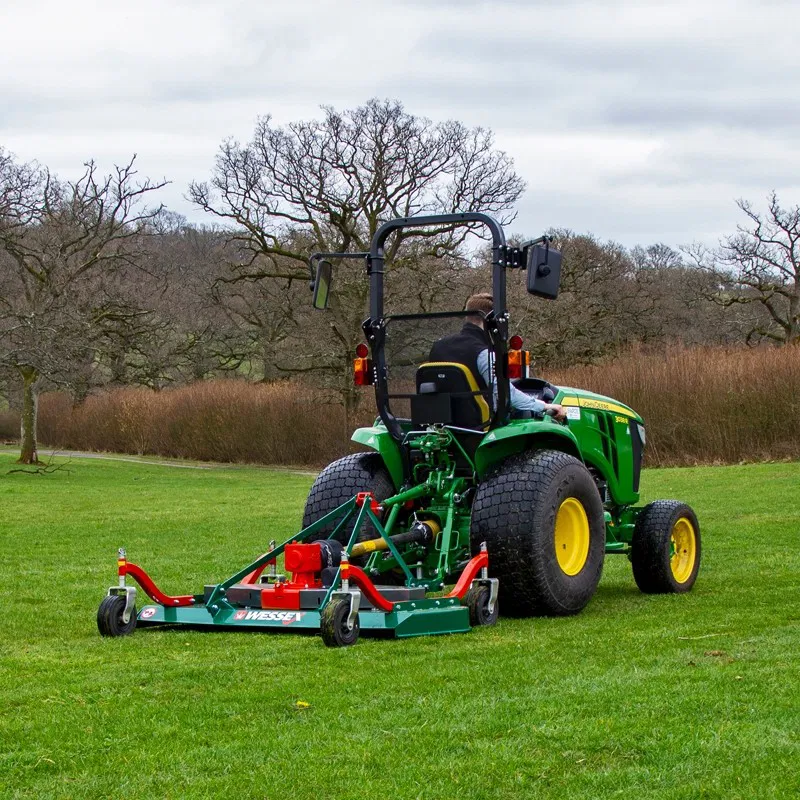
Two tractor mowers that look similar do opposite jobs
Canadian acreage owners reach the end of August with grass that has been cut all season and paddock edges that have not. A finish mower handles the first of those and is quietly ruined by the second, which is the distinction most buyers discover the hard way.
A brush cutter is built to survive what it hits, with thick blades hinged or bolted to a heavy stump jumper. Everything about it assumes contact with saplings, rocks, and hidden debris, and it leaves behind material that has been beaten off rather than cut.
Cut quality comes from speed at the blade tip
Grass is not cut by force. A blade traveling fast enough severs the blade of grass before the plant can bend away from it, and the whole design of a finish mower is arranged around reaching and holding that speed across three overlapping blades.
Slow the tip down and the same blade tears instead. Torn grass loses moisture from a ragged end and browns at the tip within a day, which is why a lawn cut with the wrong machine looks worse two days later rather than immediately.
Thin blades are a deliberate choice, not a cost saving
A light blade can be spun faster with the same power and holds a sharper edge. That is the trade the design makes, and it is the reason a stone the size of a fist will bend a finish mower blade that a brush cutter would have thrown aside without noticing.
The rear roller is what makes the cut look professional
Wheels follow the ground at four separate points, so a deck on wheels dips into every hollow it crosses. A full width roller bridges those hollows instead, holding the deck at one height across the whole cutting width and giving an even finish.
It also prevents scalping. Without a roller the deck drops as the tractor crests a rise, and the blades take the grass down to soil at exactly the spot everybody looks at, which on a lawn is a mark that takes weeks to grow out.
Three blades overlapping is a sixty inch machine, not three small ones
The cutting circles of adjacent spindles overlap slightly so no uncut strip is left between them. That overlap is why blade length and spindle spacing cannot be altered casually, and why a bent spindle shows up as a narrow ridge running the length of the paddock.
Mowers divide by what they expect to hit
- Finish mower: cut grass, thin fast blades, rollers
- Brush cutter: saplings and rough, heavy blades
- Flail: mixed ground, hinged blades, fine debris
Where a finish mower belongs and where it does not
- Strength: lawn quality finish over large areas
- Strength: even height regardless of ground shape
- Limit: one hidden rock bends a blade
- Limit: useless in grass taller than a boot
Weighed against a brush cutter, a finish mower gives up survivability and returns ground that looks maintained rather than merely cleared. An acreage owner near Guelph keeps both and walks any new area once before deciding which machine goes on the hitch.
Rural properties are being held to suburban standards
Owners of small acreages increasingly want the area around the house to look like a lawn rather than a field, which has moved equipment once found only on golf courses and sports grounds onto ordinary tractors.
That expectation of a finished surface is why the agricultural equipment TMG Industrial supplies separates machines built to cut grass from machines built to clear ground.