Garage door springs do much of the heavy lifting every time the door opens and closes. When they weaken, the whole system can become noisy, unbalanced, and unsafe. Knowing the warning signs helps homeowners understand when spring replacement may be needed before a complete failure occurs.
Why Garage Door Springs Matter
Springs counterbalance the weight of the door, making it possible for the opener and manual operation to work smoothly. Without properly functioning springs, the motor, cables, rollers, and tracks can experience extra strain. This can turn one worn part into a broader repair issue.
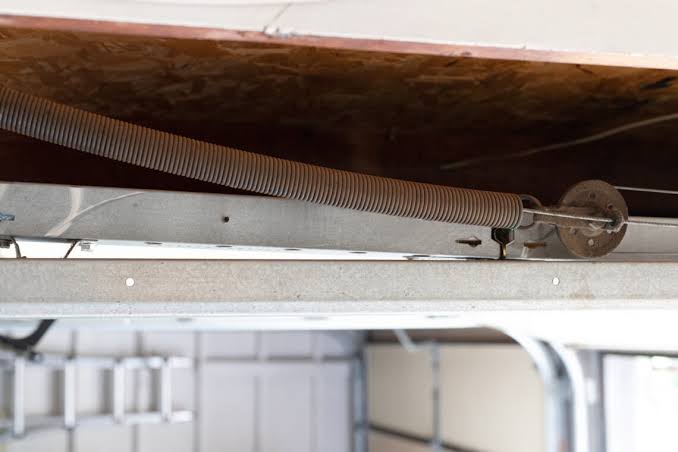
Most residential doors use either torsion springs above the door or extension springs along the sides. Both types are tightly wound and under significant tension. For that reason, spring problems should be treated as safety concerns, not simple hardware issues.
Common Signs Your Springs May Be Failing
A worn spring does not always break without warning. In many cases, the door will show changes in movement, sound, or balance first. Paying attention to these changes can help identify problems early.
- The door feels unusually heavy when lifted by hand
- The opener strains, slows down, or stops during operation
- The door opens a few inches, then drops or stalls
- The door closes too quickly or unevenly
- There is a loud bang from the garage area
- Visible gaps appear in a torsion spring coil
- Extension springs look stretched, rusty, or distorted
A loud bang is one of the clearest signs of a broken spring. It can sound like something hit the door, even when nothing has. After this happens, the door may be too heavy to lift safely.
Balance Problems and Uneven Movement
A balanced garage door should stay in place when raised halfway by hand, after the opener is disconnected. If it falls quickly or rises on its own, the springs may no longer be carrying the door’s weight correctly.
Uneven movement can also point to spring trouble. One side may lift faster than the other, or the door may appear crooked in the tracks. This can create cable tension problems and increase wear on rollers and hinges.
When Noise Indicates Spring Wear
Some garage door noise comes from rollers, hinges, or tracks, but springs can also contribute. Squeaking, grinding, or popping sounds may indicate friction, rust, or uneven tension. Lubrication can help in some cases, but it will not restore a spring that has lost strength.
If noise is paired with heavy movement, delayed opening, or visible spring damage, spring replacement may be the more likely issue. A complete inspection is usually needed to separate spring wear from other garage door repair needs.
Visible Damage to Look For
Visual inspection can reveal important clues, but springs should not be touched, loosened, or adjusted without proper equipment and training. High tension can cause serious injury if released unexpectedly.
Look for rust, separation in the coils, stretched sections, bent hardware, or loose cables near the spring system. A torsion spring with a clear gap is often broken. Extension springs that hang unevenly may also be near failure.
Why Replacing Springs Is Not a Simple Adjustment
Garage door springs must match the door’s weight, height, track setup, and cycle needs. Using the wrong spring can make the door unsafe or cause the opener to work harder than intended. Proper sizing is a key part of reliable operation.
Many homeowners search for Garage door spring replacement Santa Clarita when springs break or begin showing signs of wear. The main goal is to restore safe balance, not just make the door move again.
Related Repairs That May Appear With Spring Problems
When springs weaken, other parts may show stress. Cables can fray, drums can shift, hinges may loosen, and openers can overwork. Addressing only the spring may not resolve the full issue if related components have already been affected.
In broader service situations, Garage door repair Santa Clarita may involve checking the door’s balance, track alignment, hardware condition, and opener performance. A system-based inspection helps identify hidden wear.
Safety Habits When Springs Show Warning Signs
If a spring appears broken or the door feels unusually heavy, avoid forcing it open or closed. Do not stand under a partially open door, and keep children and pets away from the area until the problem is assessed.
The opener should not be used repeatedly when the springs are failing. An opener is designed to guide a balanced door, not lift the full door weight. Continuing to run it can damage the motor or create sudden movement.
Practical Timing for Spring Replacement
Springs have a service life measured in cycles, with one cycle being a full open and close. A door used several times daily will wear springs faster than a door used occasionally. Age, weather exposure, rust, and poor balance can shorten that lifespan.
The best time to address spring wear is when early signs appear, not after the door becomes stuck. Recognizing heavy movement, uneven travel, visible spring gaps, and unusual noise can help prevent more serious damage to the garage door system.