Why lifting, not splitting, wears people out at the woodpile, and what a log lifter changes about the work

The splitting is the easy part
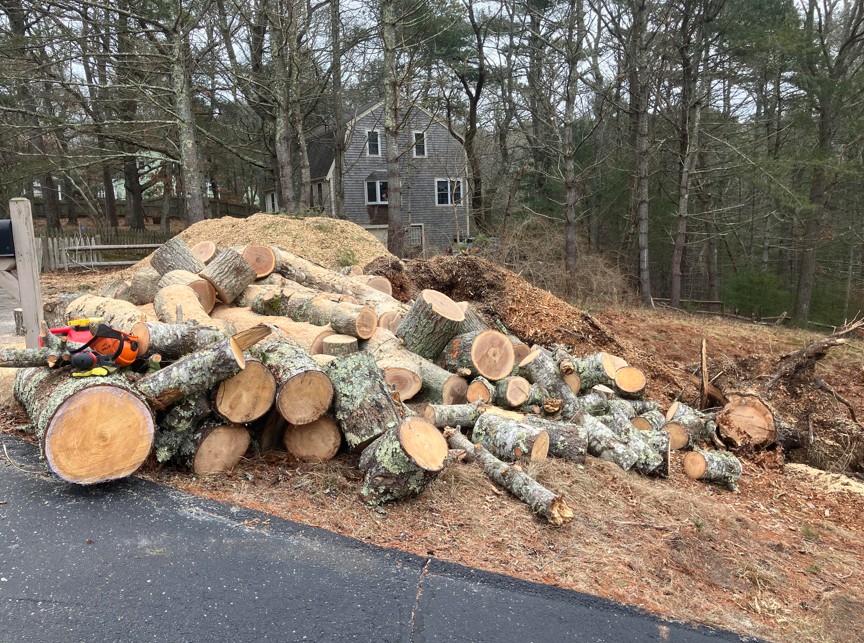
Many Australian households and small firewood sellers cut next winter’s supply in spring. Once a processor is running, the machine does the cutting and splitting. The hard physical work is getting each log from the ground up to the infeed. A log lifter takes over that step, and on Australian hardwood the difference is larger than it first appears.
Estimating what a log weighs
Weight is volume multiplied by density. A log 40 cm across and 2 m long holds about a quarter of a cubic metre of wood. Freshly cut eucalypts such as ironbark and red gum are dense and full of water, so treating a cubic metre of green hardwood as around a tonne or more gives a sensible rough figure. That log may weigh in the region of 250 kg, and a longer or thicker one quickly goes well beyond it.
Nobody should lift that by hand, and even two people would struggle to raise it safely to infeed height. A log lifter has a rated capacity, 454 kg for this unit, which sets a clear limit, and a quick estimate before loading keeps each log within it.
Repetition does the damage
Back injuries at the woodpile rarely come from one heroic lift. They build up from hundreds of moderate ones, bending low, twisting and raising a log to waist height. A hydraulic log lifter keeps the loading point near the ground, so the operator rolls logs on instead of picking them up.
Staging logs for a firewood processor
A lift works best when logs arrive at it in order. Stacking them on a low deck or rails beside the cradle, with similar diameters grouped together, lets each one roll into place. Sorting out crooked or forked pieces beforehand avoids stopping halfway through a load. The ground around the lift also needs to be firm and level, since spring rain can turn a busy loading area to mud.
Keeping hands out of pinch points
Wherever a moving part meets a fixed one, fingers can be caught, and a hydraulic cylinder does not slow down when it meets a hand. Common spots on a log lifter for firewood processor use include:
- Cradle arms meeting the frame
- The top edge of the infeed
- Chain and sprocket on the conveyor
- A log rolling off the cradle
Logs should be positioned with a cant hook or pickaroon rather than hands, which also keeps feet clear of a log that rolls unexpectedly, and nobody should stand beside the cradle while it rises, including children and dogs drawn to the noise.
Cut in spring, burn in winter
Green hardwood needs time to dry before it burns cleanly. Wood cut and split in spring, then stacked off the ground in a sunny, breezy spot with the top covered, dries through the Australian summer. Dense species such as ironbark and red gum can take longer than one summer, especially in large pieces, so a moisture tester is a better guide than the calendar. Getting through that spring cutting while it still has a summer ahead of it depends on how quickly logs reach the infeed, and a lift lets one person keep pace. The TMG Industrial 454 kg hydraulic lift is designed for the TMG-GLS16 and GLS20 processors with a chain drive infeed.