Sliding glass doors are a fantastic addition to any home or workspace, enhancing natural light, creating seamless indoor-outdoor transitions, and delivering sleek functionality. However, the material you choose for your sliding doors—for example, wood or aluminum—can significantly impact not just aesthetic appeal but also durability and longevity.
While wooden sliding doors bring warmth and traditional charm, aluminum sliding doors shine when it comes to strength, longevity, and resilience. In this blog, we’ll explore the key differences between wooden and aluminum sliding doors and emphasize why aluminum sliding doors last longer and make for a smarter long-term investment.
Why Durability Matters for Sliding Doors
Sliding doors endure constant usage, exposure to natural elements, and environmental stresses such as humidity, rain, UV rays, and temperature fluctuations. A durable material ensures that your doors stay functional and visually appealing for decades, minimizing repairs and replacements. Comparing wood and aluminum in this context makes one thing clear: aluminum sliding doors are unmatched in terms of strength and long-term performance.
Let’s break it down.
1. Durability and Longevity
Aluminum Sliding Doors: Built to Last
Aluminum is the ultimate material when it comes to durability. Thanks to its lightweight yet inherently strong structure, aluminum sliding doors are designed to withstand the test of time. Aluminum is resistant to warping, cracking, and rotting, common issues with wood sliding doors. Moreover, it can handle extreme weather and environmental conditions without losing its integrity.
Modern aluminum doors are often powder-coated, a process that fortifies them against corrosion, scratches, and fading, ensuring enduring performance and appearance. Even in high-traffic areas or homes located in harsh climates, aluminum sliding doors can maintain their functionality for 20–30 years or more.
Wooden Sliding Doors: Beauty but Vulnerability
Wooden sliding doors offer undeniable elegance and a touch of natural warmth, but they are far more susceptible to wear and tear compared to aluminum. Wood is vulnerable to moisture, temperature fluctuations, and pests, leading to issues like warping, cracking, rot, and termite infestations.
Even with regular maintenance—such as sealing, sanding, and painting—the lifespan of wooden sliding doors typically maxes out at 10–15 years. In humid or rainy climates, wood deteriorates even faster, as it absorbs moisture and swells, affecting its functionality.
Verdict: Aluminum sliding doors are stronger, low-maintenance, and built to last decades, while wood may need replacement far sooner.
2. Weather Resistance
Aluminum Sliding Doors: All-Weather Performance
One of aluminum’s greatest strengths is its ability to withstand extreme weather conditions. Whether it’s torrential rain, scorching heat, freezing temperatures, or salty coastal air, aluminum sliding doors remain unaffected. The natural corrosion resistance of aluminum ensures it won’t rust or degrade over time. Its structural stability ensures that the doors remain smooth and functional, without swelling or buckling under pressure.
Wooden Sliding Doors: Prone to Environmental Damage
Wood is a natural material, so it reacts readily to its environment. In wetter climates or areas with frequent temperature fluctuations, wooden sliding doors tend to expand and contract, leading to gaps, misaligned tracks, or operational issues. Without proper protective coatings, exposure to moisture can trigger rot, while prolonged sun exposure can cause fading and cracking.
Homeowners need to dedicate time and effort to protecting their wood doors from weather-related damage by reapplying finishes or sealants regularly, which adds to the cost of maintenance.
Verdict: Aluminum is naturally weather-resistant, making it ideal for harsh climates, while wood struggles to perform under extreme conditions.
3. Maintenance Requirements
Aluminum Sliding Doors: Low-Maintenance Solution
Aluminum sliding doors are a hassle-free option for busy homeowners. Thanks to their powder-coated finish, they resist rust, fading, and scratches, requiring only an occasional cleaning with soap and water to stay looking brand-new.
Aluminum doesn’t require repainting, resealing, or refinishing, saving both time and money while delivering worry-free performance for decades.
Wooden Sliding Doors: High Maintenance
Wooden sliding doors, on the other hand, demand constant maintenance to protect them from weather and wear. Homeowners must regularly sand, seal, or stain the wood to maintain its appearance and durability. If maintenance is neglected, wood can deteriorate quickly, leading to issues like discoloration, surface cracks, and warping. Infestations of termites or other pests are also a concern with wood.
Verdict: Aluminum sliding doors are virtually maintenance-free, whereas wooden sliding doors require significant upkeep to stay functional and attractive.
4. Aesthetic Appeal
Aluminum Sliding Doors: Sleek and Modern
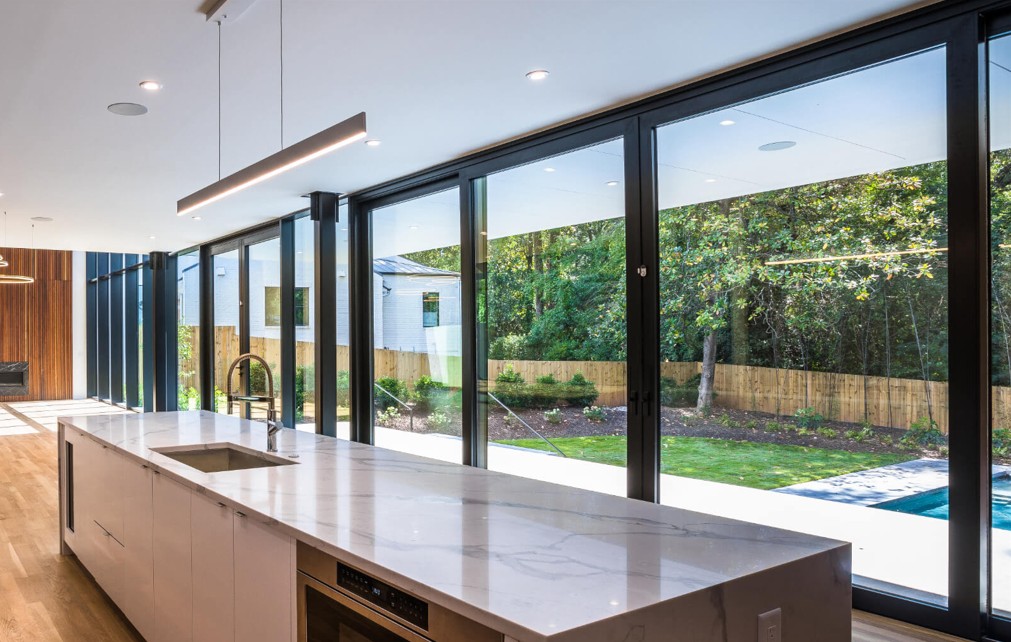
Aluminum sliding doors are known for their contemporary and minimalist design. The inherent strength of aluminum enables narrower frames, which maximize the visible glass area, creating unobstructed views and allowing more natural light into your home. This slim, sleek appearance makes aluminum sliding doors perfect for modern homes or industrial-style spaces.
Aluminum is also highly customizable, offering a wide array of powder-coated finishes, colors, and textures. You can even find finishes that mimic woodgrain textures—offering the warmth of wood with the durability of aluminum.
Wooden Sliding Doors: Timeless Charm
Wood brings a natural, rustic warmth to any home, making it a great option for traditional or rustic architecture. However, wood can look bulky due to its thicker frames and heavier visuals. Unlike aluminum, wood offers limited design versatility, as it cannot support slimline frames or larger glass panels without sacrificing structural stability.
Additionally, as wood ages, its appearance can fade or crack, requiring refinishing to maintain its charm.
Verdict: For sleekness, slim frames, and a contemporary look, aluminum sliding doors take the lead, while wood remains a choice for traditional aesthetics.
5. Cost Efficiency and Value for Money
Aluminum Sliding Doors: Long-Term Investment
While aluminum sliding doors may have a slightly higher initial cost, they deliver exceptional value for money over time due to their low maintenance needs, extended lifespan, and superior performance. Once installed, aluminum sliding doors rarely require repairs or replacements, making them a cost-effective solution in the long run.
Wooden Sliding Doors: Expensive to Maintain
Wooden sliding doors might cost less upfront than aluminum, but their high maintenance requirements and shorter lifespan make them more expensive over time. You will likely need to budget for frequent refinishing, sealing, and repairs, not to mention the potential expense of replacing the doors sooner than aluminum alternatives.
Verdict: Aluminum sliding doors offer better value for money over their lifecycle, saving you time and maintenance costs.
6. Sustainability
Aluminum Sliding Doors: 100% Recyclable
Aluminum is one of the most sustainable building materials available. It is 100% recyclable, and the recycling process retains its original quality while using just a fraction of the energy required to produce new aluminum. The long lifespan of aluminum doors also means less waste, making it an eco-friendly choice for modern homeowners.
Wooden Sliding Doors: Renewable But Resource-Intensive
Wood is a renewable resource, but the frequent need for maintenance and replacements increases the demand for resources over time. The chemicals and treatments used to preserve wood can also have a negative environmental impact, reducing its overall sustainability.
Verdict: Aluminum is a more sustainable choice, combining recyclability with a longer lifespan.
Why Aluminum Sliding Doors Last Longer
While wooden sliding doors have their own charm, they require frequent maintenance, struggle against weather conditions, and have a shorter lifespan. By comparison, aluminum sliding doors excel in all the key categories: they’re more durable, weather-resistant, low-maintenance, eco-friendly, and cost-efficient. These features make aluminum sliding doors the clear winner for homeowners seeking long-lasting, high-performance sliding doors.
Key Benefits of Aluminum Sliding Doors
- Unmatched Durability: Resistant to weather, warping, and wear, lasting 20–30+ years.
- Weather Resistance: Handles extreme climates without rotting, swelling, or cracking.
- Low Maintenance: No need for staining, painting, or frequent repairs.
- Aesthetic Versatility: Sleek, modern designs with slimline frames and customizable finishes.
- Cost Savings: Long-term value that outweighs a higher upfront cost.
- Eco-Friendly: Fully recyclable with minimal environmental impact.
When choosing between wooden and aluminum sliding doors, the choice is clear: Aluminum sliding doors are a durable, attractive, and smart investment that will stand the test of time in any home or commercial space.